
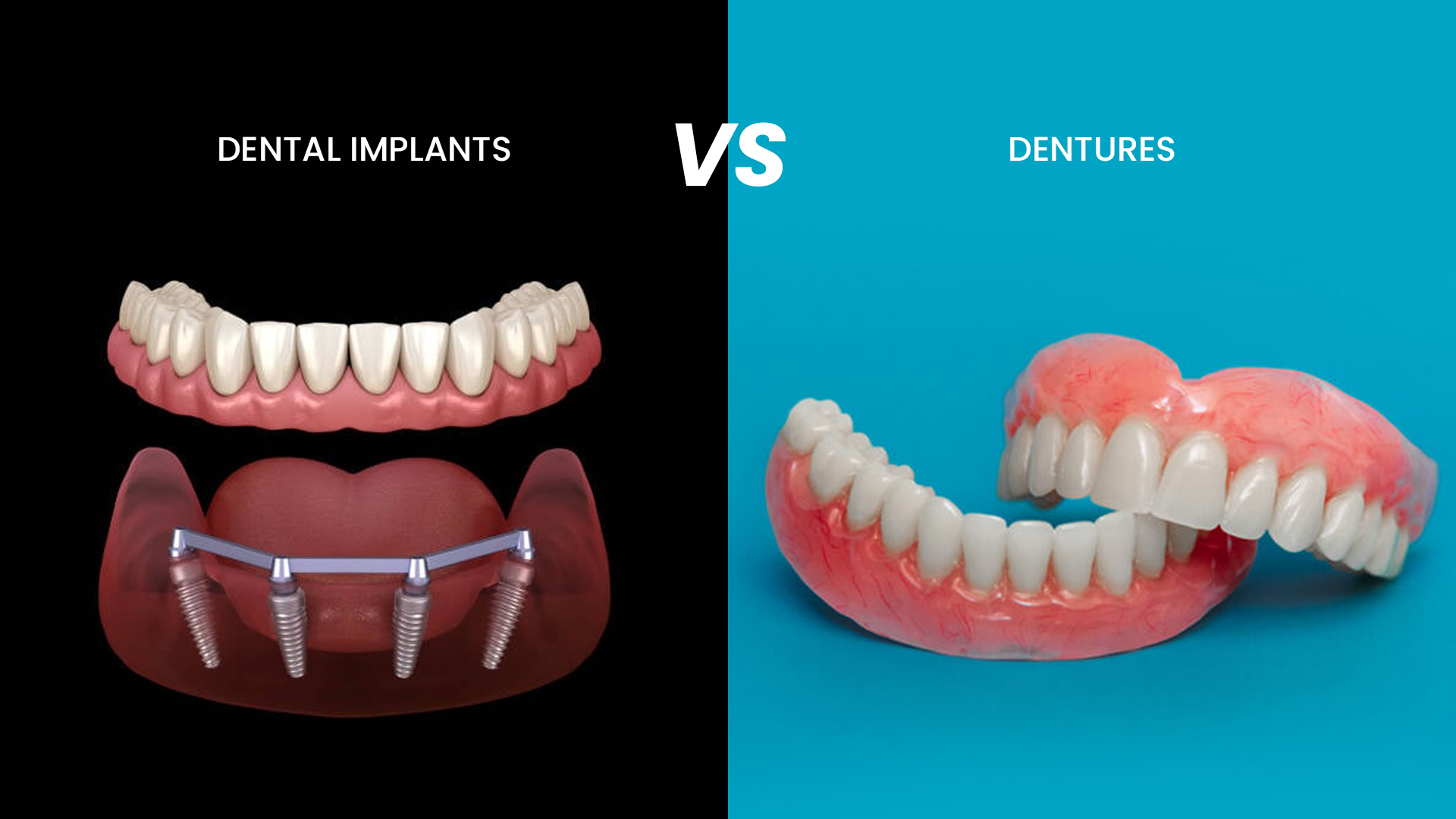
Dental Implants vs Dentures: Which Is Better for You?
Missing teeth can affect far more than your smile.
They can impact how you eat, speak, and feel about your appearance. Over time, tooth loss may also contribute to jawbone changes, shifting teeth, and difficulties with everyday comfort and confidence.
Fortunately, modern dentistry offers several effective tooth replacement options, with dental implants and dentures being two of the most common.
But many patients struggle with the same question:
Which option is actually better?
The answer depends on your individual needs, oral health condition, lifestyle preferences, and long-term goals.
While dentures have been used successfully for many years, dental implants have become increasingly popular because they offer a more stable and natural-feeling solution for tooth replacement.
Understanding how both treatments work, along with their benefits, limitations, costs, and long-term considerations, can help you make a more confident decision about restoring your smile.
What Are Dentures?
Dentures are removable dental appliances designed to replace missing teeth and surrounding gum tissue.
They are commonly used when multiple teeth or an entire arch of teeth are missing.
There are generally two main types of dentures:
- Full dentures for complete tooth loss
- Partial dentures for patients missing only some teeth
Modern dentures are designed to improve appearance and restore basic chewing and speaking function. They are custom-made to fit the patient’s mouth and may be supported by the gums or remaining natural teeth.
For many patients, dentures provide an accessible and non-surgical tooth replacement solution.
What Are Dental Implants?
Dental implants are artificial tooth roots typically made from titanium that are surgically placed into the jawbone.
Once healed, the implant supports a custom dental crown, bridge, or implant-supported denture.
Unlike removable dentures, implants are fixed securely in place and function much more like natural teeth.
Dental implants are often used to replace:
- A single missing tooth
- Multiple missing teeth
- Full arches of missing teeth
Because the implant integrates with the jawbone, it helps provide long-term stability while supporting bone health and facial structure.
Patients considering dental implants often choose implants because of their durability, comfort, and natural appearance.
Appearance and Natural Feel
One of the biggest differences between dentures and implants is how natural they feel during everyday use.
Traditional dentures sit on top of the gums and may sometimes shift slightly while speaking or eating. Even well-made dentures can feel less stable compared to natural teeth.
Dental implants, however, are anchored directly into the jawbone, creating a more secure and natural-feeling result.
Many implant patients report that implants feel much closer to real teeth because they remain fixed in place without slipping or moving.
From an appearance perspective, both dentures and implants can improve the smile significantly, but implants often provide a more natural gumline and facial support over the long term.
Comfort and Stability
Comfort plays a major role when choosing a tooth replacement option.
Dentures may require an adjustment period, especially for first-time wearers. Some patients experience gum irritation, movement while chewing, or difficulty adapting to removable appliances.
Over time, dentures may also become looser as the jawbone naturally changes after tooth loss.
Dental implants generally provide greater stability because they are permanently secured within the jawbone.
This stability often allows patients to eat, speak, and smile more confidently without worrying about movement or adhesive products.
For patients seeking a more fixed long-term solution, dental implants in Pickering are often considered a more comfortable option.
Chewing and Eating Ability
Tooth replacement should restore function as well as appearance.
Dentures can improve chewing ability significantly compared to having missing teeth, but they may still limit certain foods, especially harder or chewier items.
Some denture wearers avoid foods like:
- Nuts
- Steak
- Hard fruits
- Sticky foods
Dental implants typically provide stronger bite force and improved chewing efficiency because they function more like natural teeth.
Patients with implants can often enjoy a wider range of foods more comfortably and confidently.
Jawbone Health and Facial Structure
One major advantage of dental implants is their ability to support jawbone health.
When teeth are missing, the jawbone in that area no longer receives stimulation from tooth roots. Over time, this can lead to bone loss and facial structure changes.
Traditional dentures do not prevent this bone loss because they rest on the gums rather than stimulating the jawbone.
Dental implants help preserve bone by functioning similarly to natural tooth roots.
This can help maintain facial shape and reduce the sunken facial appearance sometimes associated with long-term tooth loss.
Maintenance and Daily Care
Both dentures and implants require proper oral care, but maintenance routines differ.
Dentures must usually be removed daily for cleaning and soaking. Patients also need to maintain gum hygiene and attend regular dental check-ups for fit adjustments.
Dental implants are cared for much like natural teeth through:
- Brushing
- Flossing
- Routine dental visits
- Professional cleanings
Although implants do not develop cavities, healthy gums and bone support remain essential for long-term success.
Treatment Time and Procedure Differences
Dentures are generally quicker to fabricate and fit because they do not require surgical placement.
Dental implants involve a more complex treatment process, including:
- Implant placement surgery
- Healing and bone integration
- Crown or restoration placement
Healing time varies depending on the patient’s bone condition and treatment plan.
While implants require more time initially, many patients choose them for their long-term durability and stability.
Cost Considerations
Cost is often one of the biggest deciding factors between dentures and implants.
Traditional dentures are usually less expensive upfront compared to dental implants.
However, dentures may require:
- Adjustments
- Relining
- Replacement over time
Dental implants generally involve a higher initial investment because of surgical placement and custom restorations.
But many patients view implants as a long-term investment due to their durability, stability, and lower replacement frequency.
The right option depends on both budget and long-term oral health priorities.
Who May Benefit More from Dentures?
Dentures may be a suitable option for patients who:
- Are missing many or all teeth
- Prefer a non-surgical solution
- Have significant bone loss
- Need a lower upfront cost option
- Are not candidates for implant surgery
Dentures can still provide meaningful improvements in appearance and function when properly fitted and maintained.
Who May Benefit More from Dental Implants?
Dental implants are often ideal for patients who:
- Want a long-term fixed solution
- Have healthy bone support
- Prefer natural stability
- Want improved chewing ability
- Wish to preserve jawbone structure
- Want minimal movement while eating or speaking
Patients considering Ajax dental implants often choose implants for their comfort, durability, and more natural feel.
Take the First Step Toward a Stronger Smile
Both dentures and dental implants can successfully restore missing teeth and improve the quality of life.
The right choice depends on your oral health condition, treatment goals, comfort preferences, lifestyle, and long-term expectations.
Dentures may offer a more affordable and non-surgical option, while dental implants provide greater stability, jawbone support, and a more natural long-term solution for many patients.
Understanding the differences between the two treatments can help you make a more informed and confident decision about your dental health and smile restoration journey.
At Allure Dental, we provide personalized tooth replacement solutions designed around each patient’s needs.
Whether you are exploring Ajax dental implants or considering dental implants in Pickering, our experienced dental team focuses on comfortable treatment planning, long-term oral health, and restoring confident smiles with modern restorative dentistry solutions.
Restore comfort, appearance, and confidence with personalized tooth replacement solutions.
FAQs
What is the main difference between dentures and dental implants?
Dentures are removable appliances that replace missing teeth, while dental implants are fixed artificial tooth roots placed into the jawbone to support permanent restorations. Implants generally feel more stable and function more like natural teeth.
Are dental implants more comfortable than dentures?
Many patients find dental implants more comfortable because they are securely fixed in place and do not move while eating or speaking. Dentures may sometimes shift or require adhesives for stability.
How long do dental implants last?
With proper care and regular dental visits, dental implants can last for many years and may even last decades in some patients. Good oral hygiene and healthy gums are important for long-term implant success.
Do dentures need to be replaced?
Yes. Dentures may need adjustments, relining, or replacement over time as the gums and jawbone naturally change shape after tooth loss.
Can dental implants prevent bone loss?
Yes. Dental implants help stimulate the jawbone similarly to natural tooth roots, which may help reduce bone loss and maintain facial structure after tooth loss.
Are dental implants painful?
The implant procedure is typically performed under local anaesthesia, and most patients experience manageable discomfort during healing. Dentists provide guidance to help patients recover comfortably.
Who is a good candidate for dental implants?
Patients with healthy gums, adequate jawbone support, and good overall oral health are often good candidates for implants. A dental assessment is needed to confirm eligibility.
Are dentures cheaper than dental implants?
Dentures generally have a lower upfront cost than implants. However, implants may offer greater long-term durability and stability, which some patients consider a valuable long-term investment.
Can I eat normally with dental implants?
Dental implants usually allow patients to eat a wider variety of foods comfortably because they provide strong bite support and remain securely fixed in place.
Where can I learn more about Ajax dental implants or dental implants in Pickering?
Patients can visit Allure Dental to explore personalized treatment options for Ajax dental implants from an experienced dental team focused on long-term oral health and smile restoration.